
Humanism?
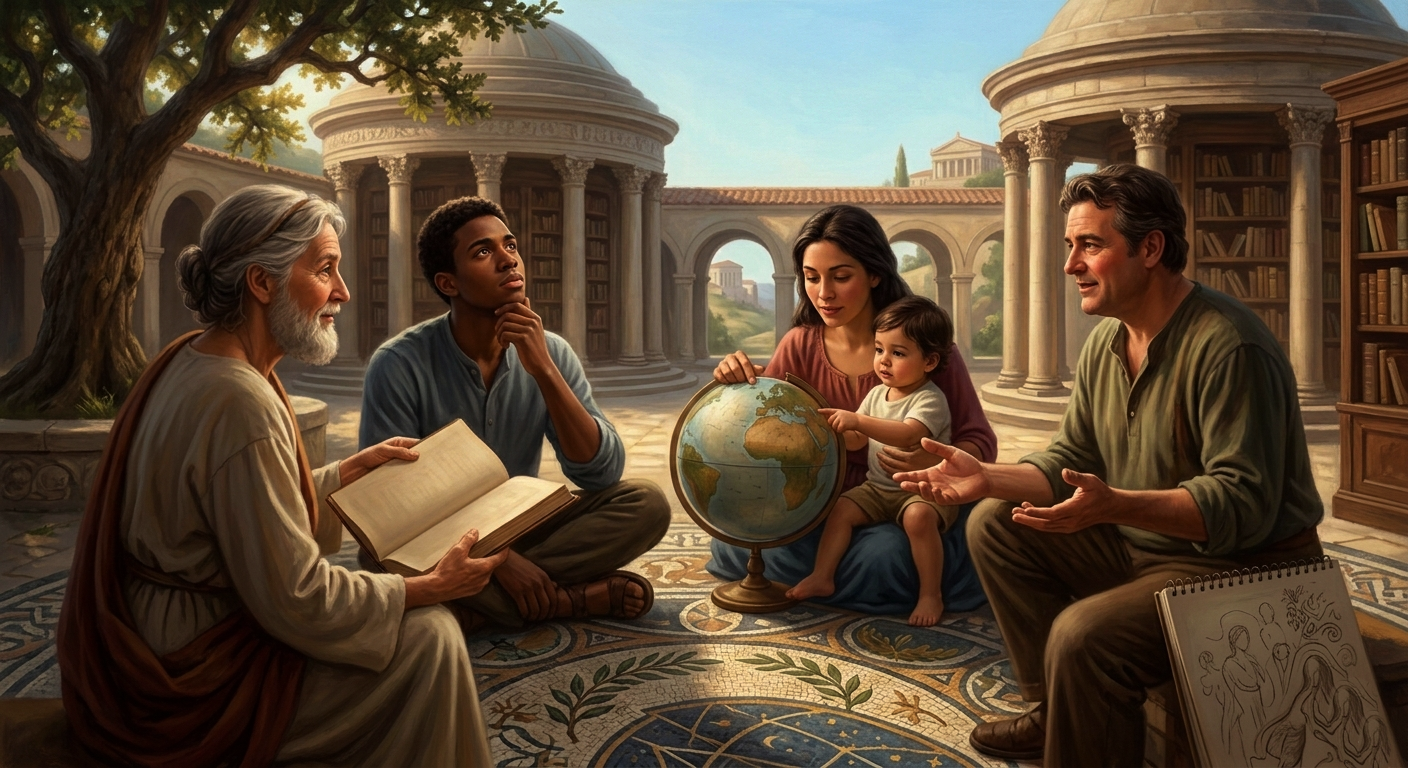
Humanism is a worldview and ethical philosophy that places human dignity, reason, and compassion at the center of moral life. It does not rely on supernatural beliefs; instead, it emphasizes human responsibility and the ability to improve the world through knowledge, empathy, and collective action.
1. The Core Tension
At its heart, humanism is an ethical philosophy that centers on human agency, reason, and scientific inquiry. Because humanism relies on the “here and now” rather than the “hereafter,” it often clashes with religious dogma.
- Epistemology: Humanists generally believe knowledge comes from observation and logic ($Evidence + Reason = Truth$), whereas many religions prioritize faith and sacred texts.
- Authority: Humanism argues that morality is a human construct designed to promote flourishing; religion often views morality as a set of divine commands.
2. Different “Flavors” of Humanism
To understand the stance on religion, you have to distinguish between these two main branches:
Secular Humanism
This is likely what most people think of when they ask this question. It is non-religious.
- Stance: It rejects theism and supernaturalism.
- Is it “anti”? It can be. Some secular humanists are “Active Atheists” who view religion as a net negative for society. Others are simply “Indifferent,” viewing religion as an outdated framework that humans have outgrown.
Religious Humanism
This might sound like an oxymoron, but it’s a significant movement (e.g., Christian Humanism or certain branches of Judaism).
- Stance: It integrates humanist ethical philosophy with religious rituals or beliefs.
- Is it “anti”? Definitely not. It suggests that one can follow a faith while still prioritizing human dignity, social justice, and scientific progress.
3. Humanism vs. Organized Religion
Humanism is more frequently anti-clerical or anti-dogmatic than it is “anti-god” in a personal sense. Most humanists advocate for:
- Secularism: The separation of church and state (protecting the right of people to be religious and the right to be free from religion).
- Individual Autonomy: Opposing religious laws that restrict personal freedoms (like reproductive rights or LGBTQ+ equality).
Summary Table
| Feature | Humanism | Traditional Religion |
|---|---|---|
| Source of Morality | Human empathy and social contract | Divine decree or scripture |
| View of the Afterlife | Generally skeptical; focus on this life | Central to the belief system |
| Problem Solving | Science, tech, and cooperation | Prayer, faith, and providence |
| Stance on Faith | Valued as “hope,” but not as “evidence” | Considered a primary virtue |
🌿 Core Idea of Humanism
Humanism begins with a simple conviction: human beings have inherent worth, and we can shape meaningful, ethical lives through our own choices. It values critical thinking, scientific understanding, and the freedom to question.
Humanism is not inherently “anti-religion,” but it is fundamentally non-religious, as it shifts the source of authority from divine revelation to human reason, empathy, and scientific inquiry. While Secular Humanists reject supernaturalism and often critique the influence of religious dogma on public policy, Religious Humanists (such as Christian or Jewish Humanists) seek to integrate human-centered ethics into a spiritual framework. Ultimately, Humanism is more focused on the positive affirmation of human potential and social justice than the active destruction of faith; it generally advocates for secularism – the idea that people should be free to practice any religion or none at all – rather than the abolition of religion itself.
🌍 Key Principles
- Human Dignity – every person deserves respect, safety, and equal rights.
- Reason and Evidence – decisions should be guided by knowledge, not fear or superstition.
- Compassion and Empathy – ethical behavior grows from understanding others’ experiences.
- Freedom of Thought – people must be free to believe, question, or not believe.
- Social Justice – a fair society requires equality, inclusion, and protection of the vulnerable.
- Responsibility – humans are accountable for solving human problems.
📚 Humanism in Practice
Humanism becomes visible in everyday actions and social commitments:
- Promoting education, science, and critical thinking
- Defending human rights and secular governance
- Challenging discrimination, intolerance, and harmful dogma
- Supporting communities through empathy and solidarity
- Encouraging ethical living without fear‑based morality
🧭 Why Humanism Matters Today?
In societies facing polarization, misinformation, and rising intolerance, humanism offers a framework rooted in shared humanity, not identity or belief. It encourages dialogue, protects minorities, and strengthens democratic values.
1. A Toolkit for Ethical Decision-Making
In an era of rapid technological and scientific advancement, we are constantly facing new moral dilemmas – from Artificial Intelligence ethics to genetic engineering.
- Reason over Dogma: Humanism provides a framework to navigate these issues using evidence and logic rather than relying on ancient texts that couldn’t have envisioned modern tech.
- Human Well-being: It keeps the focus on “Does this help or harm sentient beings?” rather than “Does this follow a tradition?”
2. Finding Common Ground in a Polarized World
As societies become more pluralistic, Humanism offers a “universal” language for morality that doesn’t require a specific religious identity.
- Shared Values: It emphasizes compassion, justice, and the Golden Rule (treating others as you wish to be treated) as human inventions that everyone can agree on.
- Secularism: It protects the rights of both believers and non-believers to live side-by-side by advocating for a neutral public square.
3. Optimism and Agency
In the face of daunting global issues like climate change, Humanism offers a powerful psychological shift:
- No “Plan B”: By rejecting the idea that a divine force will intervene to save us, Humanism places the responsibility squarely on human shoulders.
- Empowerment: It suggests that because we created these problems, we have the capacity to solve them through science, cooperation, and creativity.
4. Meaning Without Superstition
For the growing number of people who identify as “Religiously Unaffiliated” (often called “Nones”), Humanism provides a way to lead a purposeful life without needing a supernatural narrative. It celebrates human achievement in the arts, sciences, and personal relationships as enough to make life worth living.
“Humanism is the brave attempt to live a life of meaning and purpose without the need for a God to tell us why we are here.” – A common Humanist sentiment.