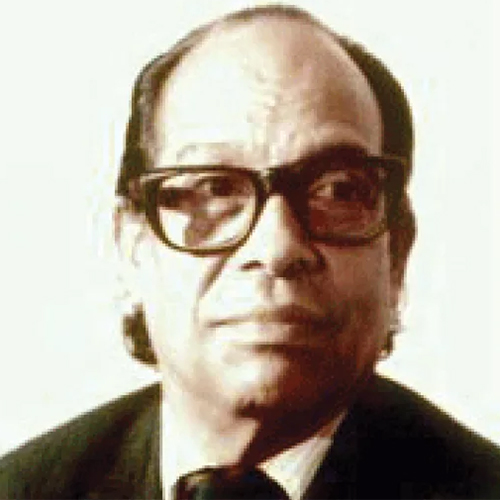

Humanists in Bangladesh

Humanists in Bangladesh Are Under the Sword

Humanists and atheists in Bangladesh have long faced hostility, censorship, and violence for questioning religious orthodoxy. Over time, this repression has escalated from social exclusion to organized killings, state pressure, and mob attacks, making the country extremely dangerous for anyone who openly rejects religious dogma. In 2013, extremists published a hit list of 84 secular writers and activists, many of whom were later attacked or murdered with machetes by groups such as AQIS and Ansarullah Bangla Team. Since then, more than 20 atheists have been killed, while laws against “defaming religion” and sweeping measures like the Digital Security Act have further restricted freedom of expression and enabled persecution of freethinkers, publishers, LGBT activists, and critics of authority.

Why They Fear for Their Lives and Live in Exile

Humanists, atheists, and secular thinkers in Bangladesh face a level of danger that makes ordinary civic participation impossible. Speaking openly about religion, advocating for secular values, or even expressing mild criticism of fundamentalism can trigger threats, harassment, and violent retaliation. Extremist groups have repeatedly targeted writers, activists, and intellectuals, while weak legal protections and inconsistent state responses leave them exposed to both mob violence and punitive laws. As a result, many humanists are forced to flee their homes, abandon their careers, and rebuild their lives abroad simply to survive and continue expressing their ideas without fear.

📋 Notable Bangladeshi Humanists
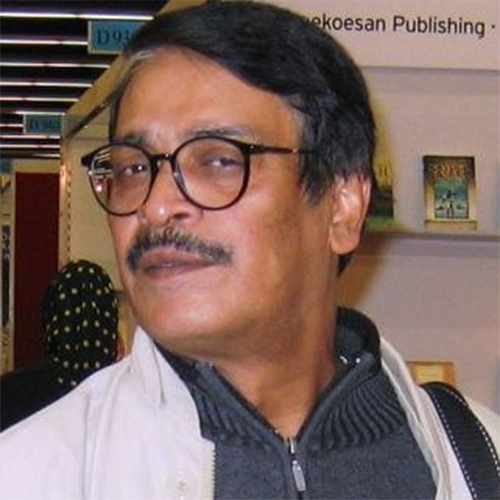
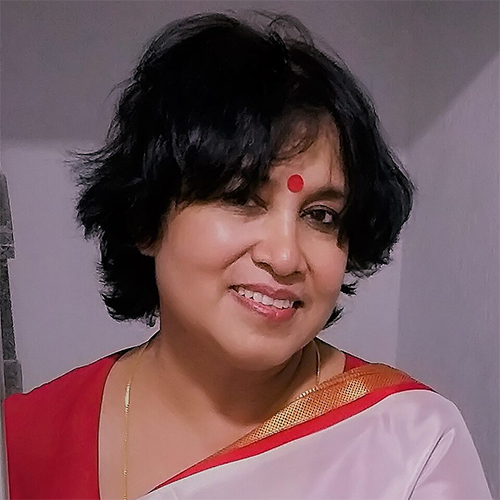
Taslima Nasrin

Taslima Nasrin

(1964 -)

Status:

Exiled

Attacked, Under Active Death Threats

Taslima Nasrin is a Bangladeshi-Swedish writer, physician, feminist, secular humanist, and activist, known for her writings on feminism and her criticism of Islam; some of her books are banned in Bangladesh. She has been blacklisted and banished from the Bengal region, and has been living in exile since 1994, with multiple fatwas calling for her death. [Wikipedia]

Taslima has written 40 books in Bengali, including poetry, essays, novels, and an autobiography series. Her works have been translated into thirty different languages. [Freethought Blogs] She has received the Sakharov Prize for Freedom of Thought from the European Parliament, the Simone de Beauvoir Award, and Human Rights Award from the Government of France, among many others. She is a Humanist Laureate of the International Academy for Humanism, USA.

[Picture: Edit from Wikipedia, CC BY-SA 4.0]

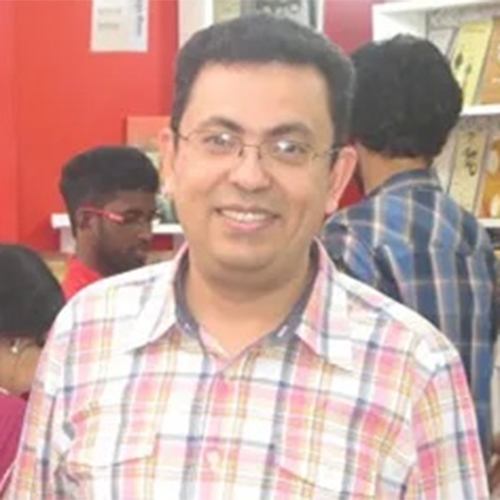
Dr. Avijit Roy

(1972–2015)

Status:

Murdered

Murdered by Islamic Extremists

Website:

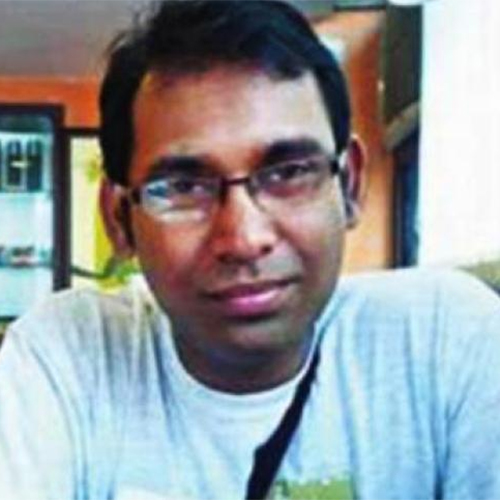
Dr. Avijit Roy was a Bangladeshi-American engineer, online activist, writer, and blogger known for creating and administrating Mukto-Mona, an Internet blogging community for Bangladeshi freethinkers, rationalists, skeptics, atheists, and humanists. He was an advocate of free expression in Bangladesh and coordinated international protests against government censorship and imprisonment of atheist bloggers. He was killed by machete-wielding assailants in Dhaka on 26 February 2015; the Islamic militant organization Ansarullah Bangla Team claimed responsibility. [Wikipedia]

He published eight Bengali books, including Obisshahser Dorshon (The Philosophy of Disbelief) and Biswasher Virus (The Virus of Faith), critically well-received books on science, skepticism, and rationalism. [Secular Humanism] The Freedom From Religion Foundation created the annual Avijit Roy Courage Award in his honor.

[Picture: Edit from Muktomona, Under Fair Use]

Dr. Humuyun Azad

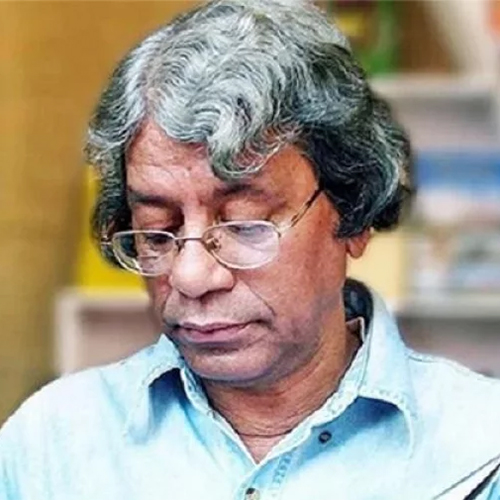
Dr. Humayun Azad

(1947–2004)

Status:

Murdered

Murdered (posthumously) by the Islamic Extrimists

Website:

(no avilable data)

Dr. Humayun Azad was a great icon of the atheist movement in Bangladesh, a professor of linguistics and literature, whose books changed the lives of many. His book My Disbeliefs is a landmark in the history of Bangla publication on atheism and religious extremism. On 27 February 2004, he became the victim of a vicious assassination attempt by assailants near the University of Dhaka during the annual Bangla Academy book fair. [Progressiveatheists]

A prolific author, poet, and literary critic, he wrote boldly on religion, patriarchy, and political Islam. He was a professor at Dhaka University and among the first major Bangladeshi literary figures to openly challenge religious orthodoxy.

[Picture: Edit from deshrupantor, Under Fair Use]

Ananta Bijoy Das

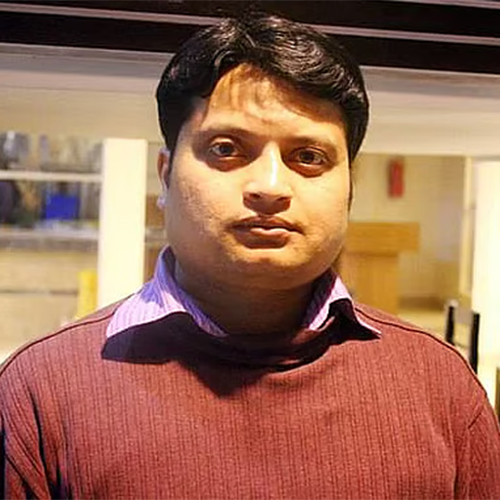
Ananta Bijoy Das

(1982–2015)

Status:

Murdered

Murdered by the Islamic Extremists

Website:

Ananta Bijoy Das authored three books on science, evolution, and the revolution in the Soviet Union, and headed a Sylhet-based science and rationalist council. He was also editor of the quarterly magazine Jukti (Logic). He was a writer on Mukto-Mona and was on the 84-name hit list. He was hacked to death by four masked men in Sylhet in May 2015. [SAMSN]

A champion of science literacy and rational thought in Bangladesh. He had received an invitation from Swedish PEN to speak about the threat to atheists in Bangladesh, but was refused a visa by the Swedish embassy on grounds that he might seek to remain in Sweden. [SAMSN]

[Picture: Edit from Prothom Alo, Under Fair Use]

Asif Mohiuddin

Asif Mohiuddin

(1984 -)

Status:

Exiled

Attacked, Imprisoned, Under Active Death Threats

Website:

Asif Mohiuddin’s Bengali-language blog, titled “Almighty only in name, but impotent in reality,” became one of the most visited web pages in Bangladesh, covering religion, free speech, and human rights. His blogging from 2008 onward provided a prominent venue for rationalist critiques of religious orthodoxy, including challenges to Islamic doctrines and advocacy for secular education and interfaith marriages, amassing up to one million views per post and fostering an online community of freethinkers. His contributions to Mukto-Mona further amplified exchanges on countering fundamentalist Islam, drawing from influences like Humayun Azad and building a network that educated readers on science, feminism, and skepticism. [Wikipedia]

Through his articles on religious fundamentalism, education policy, religious institutions, the oppression of women, and sharia, Mohiuddin evolved from freethinker to public enemy number one. He has been stabbed by extremists and detained several times by the authorities over his “blasphemous” blog posts. [SAMSN] Due to sustained international pressure, he was released and fled to Germany in 2014. In 2015, he received the Anna Politkovskaya Award for Journalism. [Secular Humanism]

A foundational figure in Bangladesh’s secular digital activism, organizer of the Bangladesh Secular Humanist Movement, and a co-founder of the 2013 Shahbag protests. His blog remains one of the most significant archives of rationalist critique of religious hypocrisy in the Bengali language. Even from exile in Berlin, his online advocacy into the 2020s remained vigorous, including live discussions and debates on atheism’s compatibility with science, the roots of religious violence, and critiques of authoritarian responses to dissent. [Wikipedia]

[Picture: Edit from Wikipedia, CC BY-SA 4.0]

Bonya Ahmed

Bonya Ahmed

(1969 -)

Status:

Attacked

Survived a Deadly Attack

Website:

Rafida Bonya Ahmed’s Bengali-language writing on Mukto-Mona — the first online platform for Bengali-speaking freethinkers, founded by her husband Avijit Roy — made her a cornerstone of Bangladesh’s secular intellectual movement. Writing under her middle name Bonya, she co-moderated the platform and contributed to popularizing science, rationalism, philosophy, and art in Bengali. Her 2007 book Bibortoner Path Dhore (“Along the Evolutionary Path”) brought evolutionary science to a mass Bengali readership, while the community fostered educated readers on atheism, feminism, and freethought across South Asia. [Wikipedia]

Through her writing on science, religious fundamentalism, and women’s rights, Ahmed evolved from blogger to target. At the Dhaka Book Fair in February 2015, she and her husband were attacked by machete-wielding extremists; Avijit was killed, and she sustained four stab wounds and lost her left thumb. Rather than retreat, a week after his death she began working with humanist associations in Europe to evacuate other activists from Bangladesh. In July 2015 she delivered the British Humanist Association’s Voltaire Lecture, titled “Fighting Machetes with Pens.” [The Humanist]

A foundational figure in international humanist advocacy, Ahmed received the Freedom From Religion Foundation’s “Forward” Award in 2016 and serves on the jury of Deutsche Welle’s The BOBS Best of Online Activism Award. She has served as a visiting fellow at the London School of Economics Human Rights Centre and testified before the U.S. House of Representatives in 2020 on the persecution of secularists. In 2019 she co-founded Think, launching the Think Bangla YouTube channel in 2020 to spread scientific knowledge and humanist values worldwide. [Wikipedia]

[Picture: Edit from Wikipedia, CC BY-SA 4.0]

Humanists Bangladesh - BW

S M Saifur Rahman

(no available data)

Status:

Exiled

Attacked, Under Active Death Threats

Website:

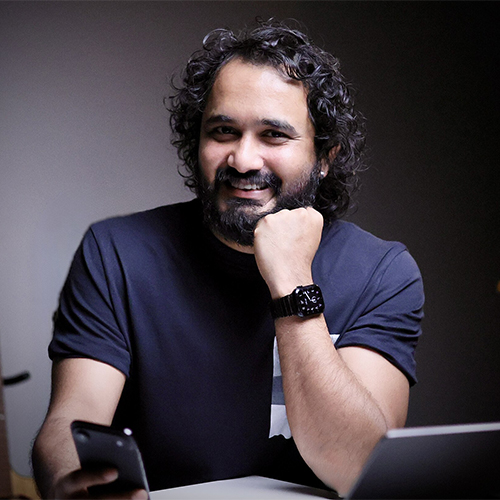
S M Saifur Rahman is an ICT for Development Specialist, startup founder, and secular humanist who actively practices secular humanism in his personal and professional life. He is the founder of D5 Creation, with over 350,000 websites running on his WordPress themes worldwide and more than 1 million beneficiaries served through social development programs.

Because he writes on human rights, the darker sides of religion, women’s rights, LGBTQ+ rights, and science education, he has been living under death threats since 2012. [smsaif]  On May 25, 2017, a mob of fundamentalists gathered in front of his rented house with the intent to kill him. [amaderkonthosor] Though he survived that day, repeated threats forced him to flee constantly, and his startup — built through years of effort — came to a standstill. On 21 June 2022, he was physically attacked in Kalaroa, Satkhira by an Islamist group. [ournews] He was saved by two bystanders but suffered serious injuries and fled to India the following day. [Wikipedia]  In March 2025, a mob attacked his village home with bricks and stones, threatening to slaughter him — followers of a self-proclaimed Mufti who had publicly declared it a religious duty to kill him. [Freedom of Thought Report] His website remains one of the most important living archives of humanist thought and persecution in Bangladesh written in both Bengali and English.

Despite facing relentless death threats through social media even today, he continues his courageous fight — advocating tirelessly for humanists’ rights, free expression, and the dignity of every human being, refusing to be silenced.

Aroj Ali Matubbar

Aroj Ali Matubbar

(1900–1985)

Status:

Historical Pioneer

Harassed by the Islamic Extremists

Website:

(no available data)

Aroj Ali Matubbar was a self-taught Bangladeshi philosopher, humanist, and rationalist, born on 17 December 1900 in the village of Charbaria Lamchari near Barisal. Born into a poor peasant family, he briefly attended a village maqtab focused only on Quranic studies, and gathered most of his knowledge on varied subjects, including science and philosophy, through his own efforts. He is known for his critical perspectives on religion, superstition, and traditional beliefs, which he expressed in his writings. [The Diplomat]

He was subjected to harassment and threats throughout his life due to writings that challenged religious statements and claims, and was arrested and taken into police custody for his book Sotyer Shondhaney (The Quest for Truth). In Bangladesh, his writings were censored. [Humanists International]

Aroj Ali was a rationalist and humanist who fought against ignorance, superstition, and religious fundamentalism. [DBpedia] He believed in human welfare, instituted stipends for poor meritorious students, established libraries and organised essay competitions, and donated his own body and eyes in the service of humanity. [Freedom of Thought Report] His major works include Satyer Sandhan (The Quest for Truth, 1973), Sristirahasya (The Mystery of Creation, 1977), Anuman (Estimation, 1983), and Muktaman (Free Mind, 1988). After his death in 1985, he came to be regarded as one of the most prolific thinkers that rural Bangladesh ever produced — an iconoclast who was not afraid of speaking out against entrenched beliefs and superstitions. [Al Jazeera]

[Picture: Edit from Wikipedia, Public Domain]

Ahmed Rajib Haider

(1986–2013)

Status:

Murdered

Murdered by the Islamic Extremists

Website:

(no available data)

Ahmed Rajib Haider was hacked to death outside his home in Dhaka in February 2013 by Islamist assailants. [Wikipedia] His killing marked the opening of a wave of systematic assassinations of secular bloggers.

A blogger and architecture student, he was active in the 2013 Shahbag protests demanding justice for war criminals. He was among the first secular bloggers killed in the post-2013 wave of extremist violence.

[Picture: Edit from thedailystar, Under Fair Use]

Washiqur Rahman

Washiqur Rahman

(1988–2015)

Status:

Murdered

Murdered by the Islamic Extremists

Website:

(no available data)

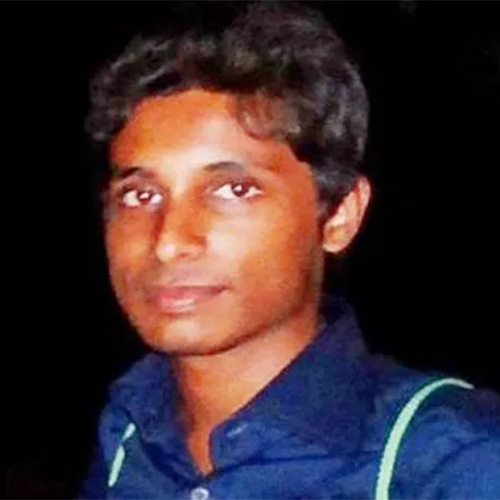
On 30 March 2015, blogger Washiqur Rahman was killed in a machete attack in Dhaka. The suspects said they killed Rahman due to his anti-Islamic articles. [Wikipedia]

A young blogger who wrote critically on religion and social issues, he was killed just one month after Avijit Roy — illustrating the relentless pattern of targeted violence against Bangladeshi humanists.

[Picture: Edit from risingbd, Under Fair Use]

Daud Haider

(1952–2025)

Status:

Exiled

First Exiled Poet from Bangladesh

Website:

(no available data)

Daud Haider (21 February 1952 – 26 April 2025) was a Bangladeshi poet forced into exile after writing a poem deemed to have “insulted” Islam. [Wikipedia] A self-declared atheist and humanist, he was described as a “distinguished poet” by the American Center and International PEN. [Daud Haider]

In 1974, his poem “Kalo Surjer Kalo Jyotsnaye Kalo Bonyaye” was published in the daily Dainik Sangbad, where he served as literary editor. It questioned the role of god, pointed at religious hypocrisy, and expressed anger towards communalism. [The Wire]

He was arrested, tortured in an effort to make him confess to being a CIA agent, and ultimately put on a plane out of the country. [ThePrint] His ancestral house was destroyed by arson, and one of his relatives was killed.

He lived the rest of his life under the shadow of a fatwa, becoming one of the earliest South Asian authors to face the wrath of religious extremism — long before Salman Rushdie and Taslima Nasreen.

Nobel laureate Günter Grass wrote personally to Germany’s Foreign Minister requesting asylum for Haider, who then moved to Berlin in 1987.  He wrote around 30 books in exile and declined German citizenship, instead holding a UN visa identifying him as “stateless (Bangladesh)” — the identity he chose to carry until death. [DNyuz]

He passed away at a care center in Berlin on 26 April 2025, at 73, never having returned to his homeland.

[Picture: Edit from Wikipedia, CC BY-SA 4.0]

Ajay Roy

Professor Ajay Roy

(1935–2019)

Status:

Passed Away

Harassed by the State and by the Islamic Extremists

Website:

(no available data)

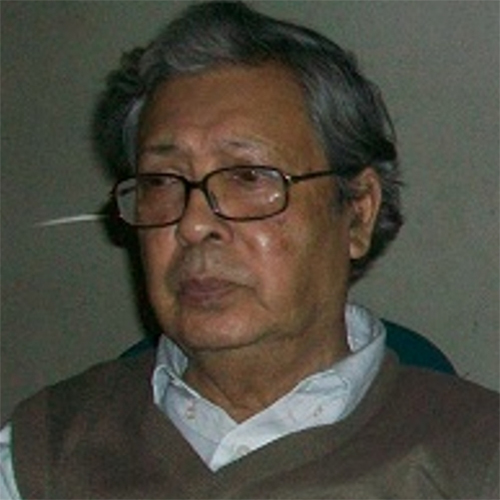
Professor Ajoy Roy (1 March 1935 – 9 December 2019) was a Bangladeshi physicist at the University of Dhaka, widely celebrated for his role in human rights activism and freethinking. He was one of Bangladesh’s most eminent educators promoting secular humanism. [Wikipedia]

As a humanist and freethinker, Roy edited Muktanwesa, a Bengali journal promoting freethinking and secular humanism, and served on the advisory board of Mukto-Mona, an online forum for rationalists, atheists, and humanists of South Asian descent. He was also an honorary associate of Rationalist International.

He translated the first chapter of Richard Dawkins’ The God Delusion into Bengali and was a pioneer in organising Darwin Day rallies in Dhaka — actively building a science-based culture in Bangladesh. 

He participated in the Language Movement of 1952, the Mass Movement of 1969, and fought as a member of Mukti Bahini during the 1971 Liberation War. 

His deepest personal tragedy came when his son Avijit Roy, a secular blogger and humanist, was hacked to death on the Dhaka University campus on 26 February 2015. Yet Roy continued his humanist advocacy until his death in December 2019.

He received the Ekushey Padak (2012) and Bangla Academy Literary Award (2011), among other honours. 

[Picture: Edit from Wikipedia, CC BY-SA 4.0]

Asad Noor

Asad Noor

(1991-)

Status:

Exiled

Attacked, Imprisoned, Under Active Death Threats

Website:

(no available data)

Asad Noor, born Asaduzzaman Noor on August 8, 1991, is an exiled Bangladeshi blogger, atheist, and human rights activist. An advocate for freedom of expression and LGBTQ rights, he has consistently criticized religious fundamentalism in Bangladesh. [Wikipedia]

A former Muslim raised in a traditional Bangladeshi family, Noor received early religious instruction in madrassas, where he began forming critical views that eventually shaped his secular humanist outlook. [Grokipedia] He began his activism by writing for blogs and social networks in 2013, becoming a target for religious fundamentalists following his involvement in the Shahbag protests.

Noor has been prosecuted multiple times for alleged blasphemy and hurting religious sentiments. He spent eight months in prison in 2018, and upon release, faced execution demands from the radical Islamist group Hefazat-e-Islam Bangladesh. 

Humanists International monitors his case closely, advocating for the dropping of all charges against him under Bangladesh’s abusive Digital Security Act. [Humanists International]

Fearing for his safety, Noor fled Bangladesh in February 2019 and has lived in exile since, continuing activism online. He has spoken at the 58th session of the UN Human Rights Council, raising concerns about religious minorities in Bangladesh.

He remains a courageous symbol of secular resistance and human dignity.

[Picture: Edit from Wikipedia, CC BY-SA 4.0]

Ahmed Sharif

Professor Dr. Ahmed Sharif

(1921–2099)

Status:

Passed Away

Harassed by the State and by the Islamic Extremists

Website:

(no available data)

Ahmed Sharif (13 February 1921 – 24 February 1999) was a Bangladeshi educationist, philosopher, critic, and scholar of medieval Bengali literature. He is recognized as one of the most outspoken atheists and radical thinkers of Bangladesh.

Born in Patiya, Chittagong, Sharif grew up surrounded by rare manuscripts collected by his uncle, the renowned historian Abdul Karim Sahitya Bisharad — an environment that shaped his towering intellect from childhood. He earned his Master’s and PhD in Bengali literature from the University of Dhaka.

His philosophical outlook was a fusion of idealism, humanism, and Marxism. Throughout his career, he authored over a hundred books and essays, powerfully rejecting prevailing superstitions, religious dogma, and oppressive social systems. He was a secular rationalist who championed science, reason, and human liberation above all institutional authority.

In the fields of South Asian literature and politics, Sharif stood as a distinguished scholar, a rebellious spirit, and a progressive humanist. His non-conformist views and commitment to freethinking made him a singular bearer of rationalist and humanist ideologies. [Wikipedia]

In a final act of profound humanism, Sharif willed his body and eyes to Dhaka Medical College in 1995, believing it more noble to serve human welfare than to be buried in the ground. He received the Ekushey Padak in 1991 and the Bangla Academy Literary Award in 1968.

[Picture: Edit from dhakatribune, Under Fair Use]

A Final Note: The names above represent only the visible surface of Bangladesh’s humanist tradition. For every name listed here, there are thousands who live in quiet, careful, anonymous dissent — in classrooms, laboratories, newsrooms, and villages across the country — waiting for a Bangladesh where speaking the truth does not cost you your life.

Call for Contributions: Humanists Bangladesh

Do you know a Bangladeshi Humanist we haven’t listed, or notice any inaccuracies in our existing entries? We’d love your help in making this resource as complete and accurate as possible.

If you’d like to add a new name or suggest edits to an existing entry, please don’t hesitate to reach out to us. Your contributions — however small — help us build a more comprehensive and representative record of Bangladeshi Humanist thought.

📧 Email us at: [email protected]
🌐 Or use our Contact Us page: humanistsbd.org/contact-us

We welcome suggestions, corrections, and any additional context you may have.