


Bangladeshi Humanists are in Danger!
Why Humanism and Secular Activism Are Dangerous in Bangladesh: A Human‑Rights Analysis
Humanism and secularism are philosophies rooted in dignity, reason, compassion, and freedom of thought. In many countries, these values form the backbone of democratic culture and intellectual progress. Yet in Bangladesh, advocating for humanist or secular ideals can be profoundly dangerous. Over the past decade, writers, activists, educators, and ordinary citizens have faced harassment, threats, and even deadly violence for expressing views that challenge religious extremism or promote rational inquiry.
This danger is not theoretical—it is documented, severe, and ongoing. According to multiple human‑rights reports and public records, Bangladesh has witnessed a series of brutal attacks carried out by violent extremist groups such as Ansar al‑Islam, Jamaat‑ul‑Mujahideen Bangladesh (JMB), and other organizations aligned with global extremist networks. These groups, responsible for severe harm and loss of life, have targeted secular thinkers, humanists, freethinkers, and religious minorities in an attempt to silence dissent and enforce ideological conformity.
Understanding why humanism and secular activism are dangerous in Bangladesh requires examining the social, political, and extremist dynamics that shape the country’s environment. It also requires acknowledging the courage of individuals—such as S M Saifur Rahman, along with many others—who continue to advocate for human dignity and freedom of thought despite these risks.
1. Historical Context: The Rise of Extremist Violence
Bangladesh has long struggled with tensions between secular nationalism and religious conservatism. While the country’s constitution originally embraced secularism, political shifts over the decades have allowed religious identity to become increasingly intertwined with public life. This shift created fertile ground for extremist groups seeking to impose rigid interpretations of religion and suppress alternative viewpoints.
Between 2013 and 2016, Bangladesh experienced a wave of targeted killings that shocked the world. According to public records and documented incidents, extremist groups carried out attacks against:
- Secular bloggers
- Humanist writers
- University professors
- LGBTQ+ activists
- Publishers
- Religious minorities
- Foreign aid workers
These attacks were not random—they were part of a coordinated campaign to eliminate voices that promoted secularism, rationalism, or human rights. Victims were often placed on public “hit lists,” accused of “blasphemy,” or labeled “anti‑Islamic” simply for advocating free thought or criticizing harmful practices.
The extremists responsible for these attacks have been condemned globally for their violence and human‑rights violations. Their actions created an atmosphere of fear that continues to affect humanist and secular activists today.
2. Why Humanists and Secularists Become Targets
Humanism and secularism challenge the authority of extremist ideology. Violent extremist groups thrive on unquestioned obedience, fear, and ideological purity. Humanism, by contrast, encourages questioning, critical thinking, and ethical reasoning based on human welfare rather than religious dogma.
This makes humanists and secular activists dangerous to extremists—not because they promote violence, but because they promote freedom.
Humanism threatens extremist control because it promotes:
- Reason over dogma
- Compassion over coercion
- Equality over hierarchy
- Freedom over authoritarianism
- Evidence over superstition
Extremist groups view these values as existential threats. When individuals begin to think critically, question harmful traditions, or advocate for human rights, extremist narratives lose power. This is why humanists and secularists are often targeted: their ideas weaken the ideological foundation of extremism.
3. The Social Environment: Stigma, Misunderstanding, and Fear
Even outside extremist violence, humanists and secular activists face social hostility. In Bangladesh, secularism is frequently misunderstood as anti‑religion rather than pro‑freedom. Humanism is often misrepresented as moral relativism or Western influence. These misconceptions create stigma that extremists exploit.
Many activists face:
- Social isolation
- Harassment
- Online threats
- Community pressure
- Employment discrimination
- Police indifference
- Media misrepresentation
This environment makes it difficult for humanists to speak openly. Even peaceful advocacy—such as promoting scientific literacy, gender equality, or freedom of expression—can provoke backlash.
4. Digital Vulnerability: Online Harassment and Targeting
The rise of social media has amplified risks. Extremist groups and ideological vigilantes monitor online activity, searching for posts they consider “offensive.” Individuals have been doxxed, threatened, and placed on extremist hit lists simply for expressing secular views online.
Humanists like S M Saifur Rahman, who publicly advocate for rationalism, human rights, and secular values, often face waves of online harassment. These attacks can escalate into real‑world threats, forcing activists to take security precautions, limit public appearances, or relocate.
Digital spaces, instead of offering freedom, often become battlegrounds where extremists attempt to intimidate and silence dissent.
5. Legal and Political Ambiguity
Bangladesh’s legal framework includes provisions that can be used—intentionally or unintentionally—to suppress secular voices. Laws related to “hurting religious sentiment” or “defamation” can be applied broadly, creating fear among activists who worry that their work may be misinterpreted.
While many officials condemn extremist violence, inconsistent enforcement and political sensitivity around religious issues can leave humanists vulnerable. Extremists exploit this ambiguity, believing they can act with impunity.
6. The Human Cost: Lives Lost and Lives Changed
The danger is not theoretical—it has taken lives.
Public records document the killings of numerous secular bloggers, writers, and activists. Many were attacked in broad daylight, in their homes, or on university campuses. Their deaths were meant to send a message: dissent will not be tolerated.
Others survived attacks but carry lifelong trauma. Families of victims face stigma, fear, and social isolation. Many activists have fled the country, seeking asylum abroad. Those who remain often live under constant threat.
Humanists like S M Saifur Rahman continue their advocacy despite these risks, demonstrating extraordinary courage. Their work highlights the resilience of Bangladesh’s humanist community and the importance of defending freedom of thought.
7. Why Extremists Fear Humanism
Extremist groups fear humanism because it undermines their ideological foundation. Humanism promotes:
Critical Thinking
Extremists rely on unquestioned obedience. Humanism encourages questioning, analysis, and skepticism.
Compassion
Extremist ideology often dehumanizes opponents. Humanism insists on empathy and universal dignity.
Equality
Extremists promote rigid hierarchies. Humanism demands equal rights for all, including women, minorities, and nonbelievers.
Freedom
Extremists enforce conformity. Humanism celebrates individuality and free expression.
Evidence
Extremists rely on dogma. Humanism relies on science, reason, and facts.
These values weaken extremist narratives, making humanists natural targets for suppression.
8. The Role of Humanists Bangladesh
Organizations like Humanists Bangladesh play a vital role in promoting human dignity, reason, and compassion. They challenge intolerance, support marginalized voices, and strengthen communities through education and humanist values.
But this work is not without risk. Humanists Bangladesh operates in an environment where advocating for secular ethics can provoke hostility from extremist groups. Members often face online harassment, misinformation campaigns, and threats.
Despite these challenges, Humanists Bangladesh continues to promote:
- Freedom of thought
- Evidence‑based understanding
- Human rights
- Community solidarity
- Peaceful dialogue
Their work is essential for building a more just and inclusive Bangladesh.
9. The Path Forward: Protecting Humanists and Secular Voices
To reduce the danger faced by humanists and secular activists, Bangladesh must strengthen:
Legal protections
Clear laws protecting freedom of expression and punishing extremist violence.
Law enforcement response
Consistent action against extremist threats and attacks.
Public education
Promoting scientific literacy, critical thinking, and ethical reasoning.
Digital safety
Protecting activists from online harassment and doxxing.
Social dialogue
Encouraging peaceful conversation across ideological divides.
Community support
Standing with individuals who face threats for expressing their views.
Humanism is not a threat—it is a path to peace, dignity, and progress. Protecting humanists protects Bangladesh’s future.
Courage in the Face of Danger
Humanism and secular activism are dangerous in Bangladesh not because they promote harm, but because they challenge the forces that rely on fear, dogma, and intolerance. Extremist groups—responsible for severe violence and human‑rights violations—target humanists precisely because humanism empowers people to think freely and live with dignity.
Yet despite these dangers, activists like S M Saifur Rahman and many others continue to advocate for reason, compassion, equality, and freedom. Their courage reflects the resilience of Bangladesh’s humanist community and the enduring power of ethical conviction.
Humanism is not merely a philosophy—it is a commitment to humanity. And in Bangladesh, defending humanity requires extraordinary bravery.
Related Posts

How Secularism Creates the Intellectual Freedom Necessary for Scientific Innovation and Human Progress Worldwide
Secularism is often misunderstood as merely the separation of religion from the state. In reality,Read More
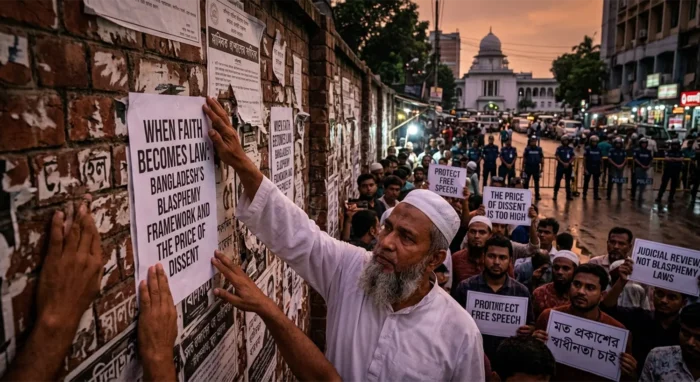
When Faith Becomes Law: Bangladesh’s Blasphemy Framework and the Price of Dissent
Bangladesh was founded in 1971 on four pillars: nationalism, democracy, socialism, and secularism. Half aRead More

Humanism in Bangladesh is Growing as More People Embrace Critical Thinking
Humanism in Bangladesh is gaining visibility as a social and intellectual current that emphasizes reason,Read More
Comments are Closed