


Respect, Reason, Care
Dignity and Humanism: Reclaiming Worth in an Age of Rapid Change and Moral Uncertainty
Dignity and humanism are twin pillars of a humane public life. Where dignity names the intrinsic worth of each person, humanism supplies a framework for organizing social life around reason, empathy, and shared responsibility. Together they offer a moral vocabulary for resisting dehumanization—whether produced by economic inequality, political exclusion, or cultural contempt—and for designing institutions that honor human flourishing. This article examines how dignity and humanism intersect, why they matter now, and what practical steps can translate these ideals into everyday policy and culture.
What dignity means today
The concept and its moral force
Dignity is often invoked as a foundational moral claim: every person possesses an inherent worth that commands respect. Philosophers, human-rights advocates, and legal systems treat dignity as both a normative principle and a practical constraint on power. In contemporary discourse, dignity functions in three overlapping ways: as a moral status (a claim about what humans are), as a right (a basis for legal protections), and as a political ideal (a standard for public policy). This layered meaning makes dignity a powerful tool for critiquing practices that degrade people—poverty, forced displacement, humiliating bureaucratic processes, and discriminatory laws.
Dignity under pressure
Modern forces—marketization, surveillance, and polarized politics—strain dignity. Economic systems that treat labor as a commodity can erode self-respect; bureaucratic systems that reduce people to case numbers can strip away personhood; and public rhetoric that dehumanizes groups corrodes social solidarity. Recognizing these pressures is the first step toward designing responses that restore dignity rather than merely managing its symptoms.
Humanism as a practical ethic
Core commitments of humanism
Humanism centers human welfare and rational inquiry. It rejects supernatural authority as the sole arbiter of moral truth and instead emphasizes evidence, dialogue, and compassion. Key commitments include critical thinking, secular governance, human rights, and social responsibility. Humanism does not deny religious belief; rather, it insists that public policy be justified by reasons accessible to all citizens, religious or not.
Why humanism matters for dignity
Humanism supplies the methods and institutions that make dignity actionable. Where dignity states that people deserve respect, humanism asks how to realize that respect through education, law, and public services. It favors policies that reduce humiliation—universal social protections, participatory governance, and transparent institutions—because these measures protect the conditions in which dignity can be lived.
Intersections: How dignity and humanism reinforce each other
From principle to practice
Dignity without mechanisms can be an empty slogan; humanism without a moral anchor can become technocratic. Together, they form a complementary pair: dignity provides the normative aim; humanism provides the tools for achieving it. For example, a dignity-centered approach to healthcare insists that access be universal and respectful; humanist methods guide the design of evidence-based, patient-centered systems that minimize indignity.
Cultural and institutional translation
Translating dignity into institutions requires cultural work—shifting norms about who counts as fully human—and institutional redesign—creating procedures that treat people as agents rather than objects. Examples include redesigning welfare systems to avoid humiliating eligibility checks, reforming policing to prioritize de-escalation and accountability, and structuring workplaces to respect workers’ autonomy and voice.
Policy implications and practical steps
Education and civic formation
Education that cultivates critical thinking, empathy, and civic literacy is foundational. Curricula that teach argumentation, media literacy, and ethical reasoning equip citizens to defend dignity in public debate and to hold institutions accountable.
Social safety nets and labor policy
Robust social protections—universal healthcare, basic income experiments, and accessible childcare—reduce the material conditions that make indignity inevitable. Labor policies that guarantee living wages, collective bargaining, and safe working conditions protect workers’ dignity in the marketplace.
Justice and legal reform
Legal frameworks must enshrine dignity not only in abstract rights but in procedural protections: fair trials, humane detention conditions, and anti-discrimination enforcement. Administrative processes should be simplified and human-centered to avoid bureaucratic humiliation.
Public discourse and media norms
Media and political rhetoric shape whether groups are treated as fully human. Promoting norms of respectful discourse, combating dehumanizing language, and supporting independent journalism are essential to a dignity-preserving public sphere.
Challenges and tensions
Balancing universalism and cultural difference
Dignity and humanism claim universal relevance, but their application must respect cultural pluralism. Tensions arise when universal standards collide with local practices. The challenge is to defend core protections—freedom from torture, equality before the law—while engaging communities in dialogue about how dignity is best realized in context.
Avoiding paternalism
Efforts to protect dignity can become paternalistic if they override people’s agency in the name of “best interests.” Humanism’s emphasis on reason and participation helps guard against top-down solutions by centering affected communities in policy design.
Political feasibility
Policies that restore dignity often require redistribution and institutional reform—politically difficult moves in polarized environments. Building broad coalitions that link dignity to shared interests (public health, economic stability, social cohesion) increases feasibility.
Cultural work: stories, symbols, and everyday practice
Narratives that humanize
Stories matter. Literature, film, and public commemoration that highlight ordinary lives and struggles can shift public empathy. Celebrating acts of care and civic courage creates cultural scripts that normalize respect.
Rituals and public design
Public spaces and rituals can embody dignity: accessible architecture, dignified public services, and ceremonies that honor diverse contributions reinforce a civic culture of respect.
Conclusion
Dignity and humanism together offer a robust framework for confronting the moral challenges of our time. Dignity names the worth that must be protected; humanism supplies the reasoning, institutions, and practices to do so. Translating these ideals into policy and culture requires sustained work—education, legal reform, social protections, and a media environment that resists dehumanization. The task is both practical and moral: to build societies where people are not merely tolerated but respected, where policies are judged by how they preserve human worth, and where public life is organized around reasoned compassion. In an era of rapid change, reclaiming dignity through humanist practice is not only ethically compelling but politically necessary.
Related Posts

How Secularism Creates the Intellectual Freedom Necessary for Scientific Innovation and Human Progress Worldwide
Secularism is often misunderstood as merely the separation of religion from the state. In reality,Read More
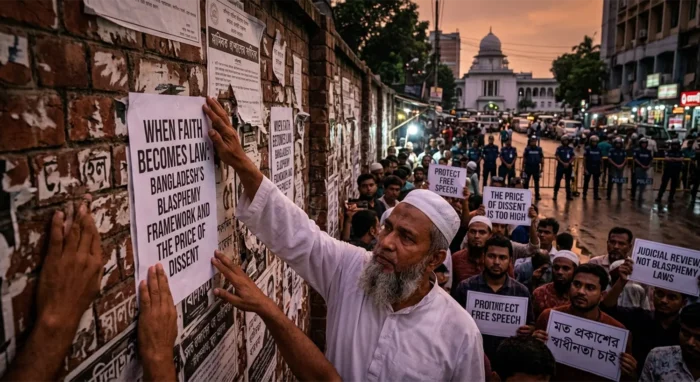
When Faith Becomes Law: Bangladesh’s Blasphemy Framework and the Price of Dissent
Bangladesh was founded in 1971 on four pillars: nationalism, democracy, socialism, and secularism. Half aRead More
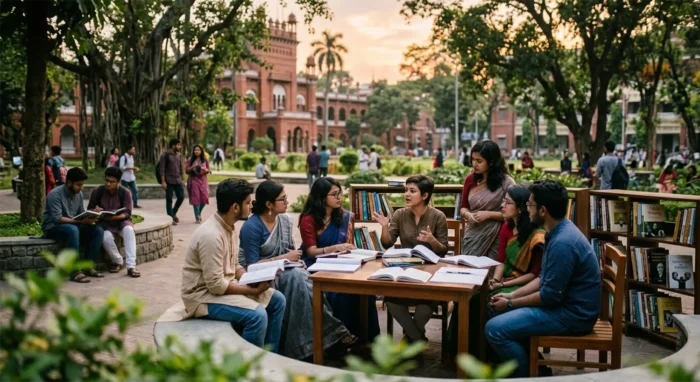
Humanism in Bangladesh is Growing as More People Embrace Critical Thinking
Humanism in Bangladesh is gaining visibility as a social and intellectual current that emphasizes reason,Read More
Comments are Closed